

2026 Edition · Overland Guide
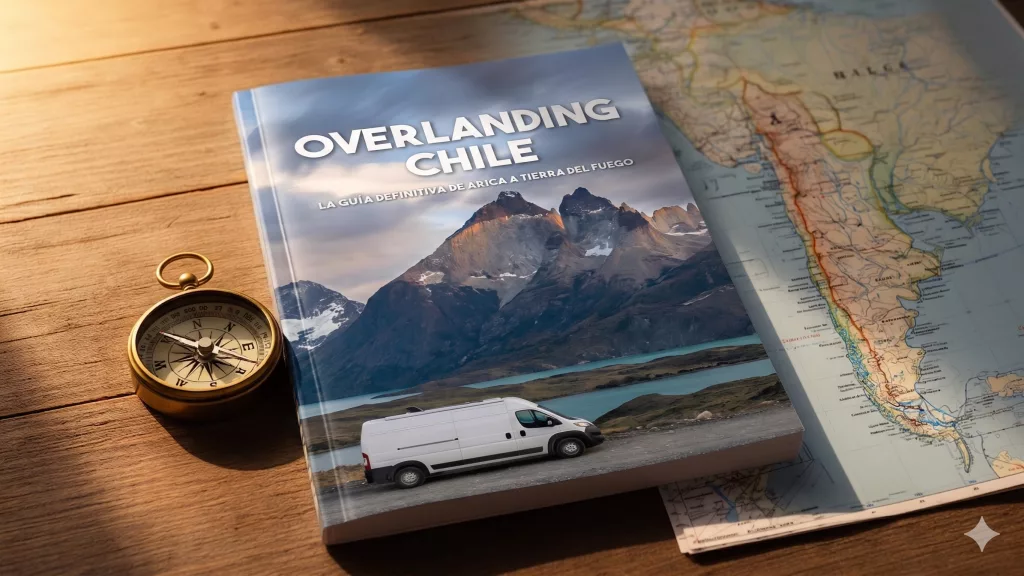
Overlanding Chile
The definitive guide for crossing Chile in your own vehicle: 120+ key locations, 5 route proposals, real budgets, and legal places to sleep. From the Atacama Desert to the southern glaciers — works for vans, 4×4s, campers, pickups, trucks, motorbikes, or bicycles.
Planning to cross Chile but don’t know where to start?
We know how it feels — we asked ourselves these same questions before we started.
Scattered, outdated info
Contradictory data on blogs, forums and maps — often written by people who’ve never traveled this way.
Where can you legally sleep?
In Chile you can camp almost anywhere, but not everywhere. National parks, private property and certain areas have their own rules that are worth knowing in advance.
Border paperwork feels overwhelming
Showing up at a border crossing without the PITV, SAG documents, or vehicle permits in order can ruin your day.
Every region is a different world
Atacama, Patagonia and the Carretera Austral are completely different worlds: climate, access and distances. Each one needs its own preparation.
No clue about real costs
Diesel, tolls, Carretera Austral ferries, gas, food… nobody tells you what a month on the road actually costs.
Your time is limited
Planning a trip like this can take you weeks. This guide saves you that work: read it and leave with a plan.
What you’ll get with this guide
Total independence
Designed for independent travel — not for organized tours.
Real logistics
Real trip costs — diesel, tolls, ferries and everything else.
Route proposals
How to cross some of the most stunning regions in the country.
No surprises
Borders, SAG inspections, and vehicle permits explained step by step.
Is this guide for you?
To save you time: we tell you straight whether it’ll help you or not.
Yes, if…
- You want to cross Chile in your own vehicle (van, 4×4, camper, pickup, truck, or motorbike).
- You’re coming from abroad and need to understand borders, SAG, and permits.
- You’re looking for legal and safe places to sleep.
- You want to know what it really costs: diesel, tolls, ferries, food, gas.
No, if…
- You’re traveling by hotel and rental car for a week.
- You only want to visit Torres del Paine on an organized tour.
- You’re after a photo book with no practical logistics info.
- You’re not interested in border procedures or vehicle paperwork.
What’s inside
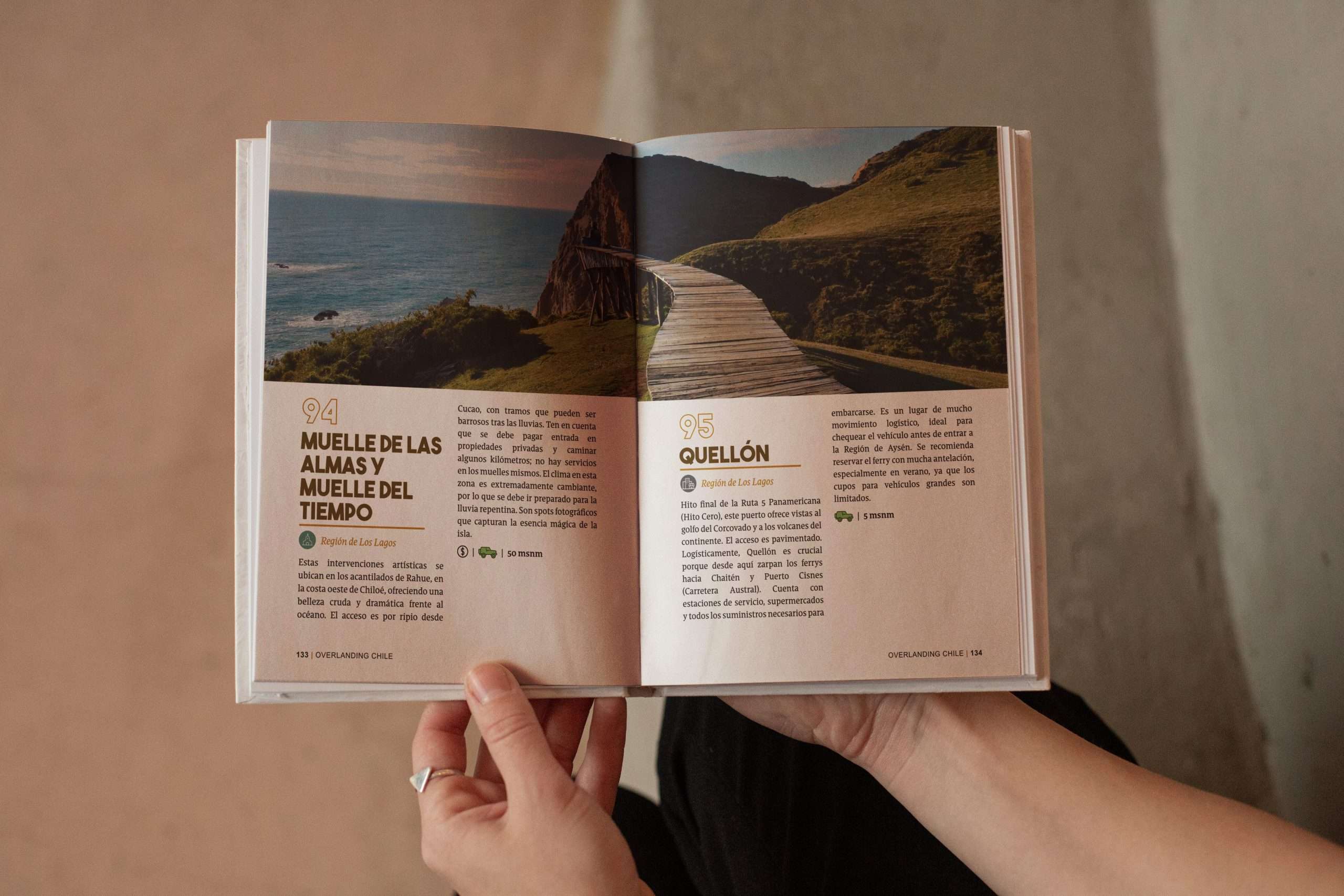
173 pages with maps, photos, and everything you need to cross the country from north to south.
- Our approach Who we are, our overland philosophy, and our 10 must-knows so you don’t miss a thing.
- General overview Quick country guide, customs, visas, border crossings, and the real economics of the trip.
- Overland logistics Where to sleep, fuel, water, gas, electricity, and staying connected on the road.
- Food What to try and where — local flavours and products you can’t miss.
- Vehicle and route Mechanics, road conditions, driving, and overland self-sufficiency.
- Health, safety and planning Personal safety, theft prevention, public holidays, and trip planning without surprises.
- The 5 faces of Chile Norte Grande, Norte Chico, Central, South and Austral — region by region.
- Itineraries and resources Classic routes, tools, and practical resources to take with you on the road.
Choose your format
Available in three formats. Each one fits a different way of reading.
Frequently asked questions
Which formats is it available in?
Digital PDF, eBook for Kindle and other readers, and a physical pocket book. Pick whichever works best for you.
What exactly is included?
173 pages with photos, detailed maps of each route, real trip budgets, lists of places to sleep, and step-by-step border-crossing guides.
Does it work if I’m not traveling by van?
Yes. The guide is designed for any overland trip: 4×4s, vans, motorhomes, trucks, expedition vehicles, and even motorcycles.
Is it available in other languages?
Yes. For now, the guide is available in Spanish and English.
